
The global mining industry stands at a critical juncture, tasked with supplying the raw materials necessary for modern civilization while simultaneously minimizing its environmental footprint. As we transition towards a more circular economy, the machinery and methodologies employed at extraction sites are undergoing significant scrutiny. Among the most transformative innovations in this sector is the advent of mobile crushing technology. Gone are the days when crushing operations were confined to fixed, distant locations requiring extensive haulage. Today, the mobile stone crusher(trituradora móvil de piedra) has emerged not merely as a tool of convenience, but as a cornerstone of sustainable mining development. This article delves into the multifaceted role of these agile machines, exploring their operational benefits, environmental responsibilities, and the economic considerations—such as stone crusher price—that dictate their deployment in the quest for greener mining practices.
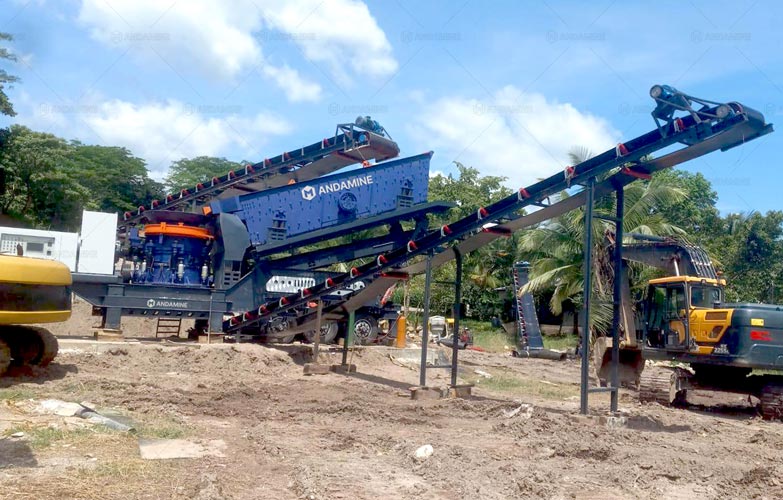
The paradigm shift: from stationary to mobile
Traditional mining operations relied heavily on fixed stone crusher plant installations. While efficient for high-volume, long-term projects, these plants required raw material to be transported over considerable distances from the mine face to the crusher. This involved a fleet of haul trucks, consuming vast amounts of diesel and contributing significantly to a mine’s Scope 1 emissions. The introduction of mobile crushing plants has reversed this logistics model. By bringing the crusher to the material, the dependency on haulage is drastically reduced, leading to immediate and substantial reductions in fuel consumption and greenhouse gas emissions.
Reducing the carbon footprint through in-pit crushing
In-pit crushing and conveying (IPCC) systems utilizing mobile crushers represent a leap forward in operational sustainability. Instead of trucks navigating steep ramps, crushed material is often transported via conveyors, which are electrically powered and far more energy-efficient. A mobile stone crusher positioned at the active mining face can process ore and waste rock on the spot, effectively decoupling material movement from the internal combustion engine. This shift is not just an incremental improvement; it is a fundamental redesign of material flow that aligns directly with the decarbonization goals of modern mining companies.
Maximizing resource utilization and reducing waste
Sustainability in mining extends beyond energy use to encompass the very resource being extracted. Mobile plants allow for a more selective mining process. High-grade material can be processed separately from lower-grade stockpiles. Furthermore, mobile units are exceptionally adept at handling what was previously considered waste.
The role of the concrete crusher in circular mining
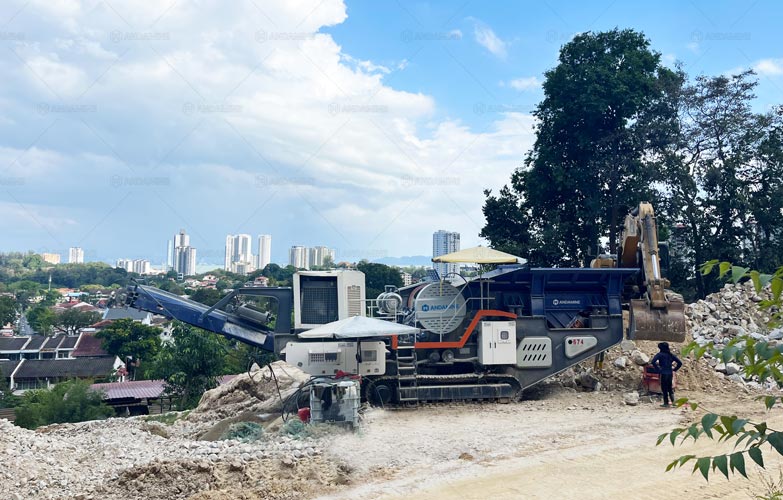
A significant aspect of sustainable development is the reduction of construction and demolition waste entering landfills. While primarily designed for aggregate production, the modern concrete crusher variant of mobile plants plays a vital role in mine-site sustainability. Many mining operations have associated infrastructure—offices, workshops, and accommodation villages. When mines reach the end of their life, demolition is inevitable. A mobile concrete crusher(trituradora de hormigón) can process this demolished concrete on-site, turning debris into recycled aggregate for road base or backfill material. This closes the loop on material use, embodying the principles of the circular economy directly within the mining lifecycle.
Economic and social dimensions of sustainability
Sustainability is often viewed through an environmental lens, but its economic and social pillars are equally important. Mobile crushing plants contribute positively to all three.
Lowering operational expenditure
The reduction in truck haulage directly translates to lower fuel costs, reduced tire wear, and fewer maintenance hours on a large fleet. While the initial stone crusher price for a high-quality mobile plant can be substantial, the total cost of ownership often favors mobility. The operational flexibility means a single stone crusher plant(planta trituradora) can serve multiple pits or quarries over its lifetime, maximizing the return on investment and deferring the capital expenditure associated with building multiple fixed installations.
Enhancing community relations
Fixed crushing plants are stationary sources of noise and dust. By locating the crushing activity closer to the source and deeper within the pit, mobile units can significantly reduce the nuisance experienced by nearby communities. Furthermore, the ability to process materials on-site for local infrastructure projects—such as road construction—demonstrates a tangible benefit to local populations, fostering better community relations, which is a cornerstone of social sustainability.
Technological advancements and responsible operation
The responsibility of a mobile stone crusher in sustainable development is not automatic; it is unlocked through technology and conscientious operation.
Dust and noise mitigation technologies
Modern mobile crushers are engineered with integrated dust suppression systems, utilizing water sprays or misting cannons to contain particulate matter at transfer points. Enclosures for engines and crushing chambers are designed to dampen noise pollution. The responsibility lies with the operator to maintain these systems and deploy the equipment strategically—for instance, positioning the plant to use natural landforms as sound barriers.
Energy efficiency and electrification
The push for sustainability is driving a new wave of innovation: hybrid and fully electric mobile crushers. While diesel engines provide the flexibility for remote locations, the ability to run a stone crusher plant off the grid—or via a hybrid diesel-electric system—allows mines to optimize energy sources. When connected to a renewable-powered grid, the operational carbon footprint of the crushing circuit can approach zero.
Navigating the investment: stone crusher price and value
For mining operators looking to embrace sustainable practices, the procurement of mobile equipment is a critical decision. The stone crusher price(trituradora de piedra precio) is often the first hurdle. However, a sustainable procurement strategy looks beyond the initial capital outlay.
A lower-priced unit may lack the advanced emission controls, fuel efficiency, or dust suppression capabilities of a more premium model. The true cost of a crusher includes its environmental liability over its lifespan. Investing in a machine with a higher upfront stone crusher price but lower fuel consumption and higher recycling capability often results in a lower overall environmental impact and better alignment with stringent future regulations. This is where the industry’s responsibility lies: in valuing long-term planetary health over short-term accounting gains.
Conclusion: The mobile crusher as a tool for the future
The role of the mobile crushing plant in sustainable mining development is no longer peripheral; it is central. By enabling in-pit crushing, these machines drastically cut emissions. By processing waste concrete and marginal ores, they embody the circular economy. And by offering operational flexibility, they enhance economic resilience. However, this potential can only be realized through responsible ownership and operation. From the selection process, where the stone crusher price is weighed against environmental performance, to the daily management of noise and dust, the industry must wield these powerful tools with foresight. As we move forward, the integration of advanced, mobile crushing technology will be a defining characteristic of a mining sector that is not only productive but truly sustainable.